Have you ever wondered why your credit score dropped even though you paid every bill on time?
Or why someone with very little debt can still have an excellent credit score?
The answer often comes down to one of the most important—and misunderstood—credit score factors:
Credit utilization.
Many people believe that simply paying their credit card bills on time is enough to build excellent credit. While payment history is extremely important, it’s only part of the picture.
How much of your available credit you use can also have a significant impact on your credit score.
For example, imagine two people each have a credit card with a $5,000 credit limit.
- Person A has a balance of $250.
- Person B has a balance of $4,500.
Both make every payment on time.
Even though neither person has missed a payment, Person A may appear to lenders as using credit more conservatively because they are using a much smaller percentage of their available credit.
This is why understanding credit utilization is essential if you want to build and maintain a strong credit score.
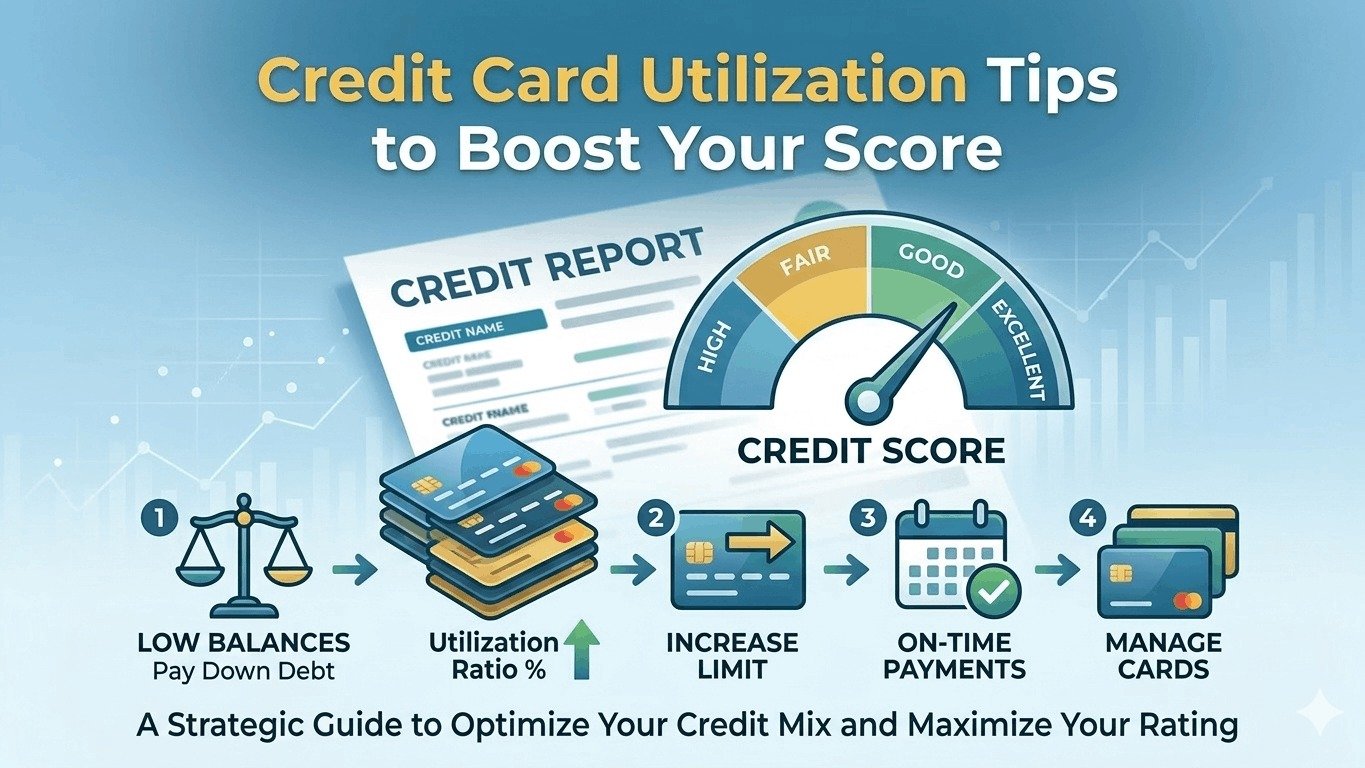
The good news is that credit utilization is one of the few credit score factors you can often improve relatively quickly. By understanding how it works and managing your balances responsibly, you may be able to strengthen your credit profile without opening new accounts or taking on additional debt.
In this complete guide, you’ll learn:
- What credit utilization is
- How your credit utilization ratio is calculated
- Why it matters to lenders and credit scoring models
- What is considered a good utilization percentage
- Practical strategies to keep your utilization low and support a healthy credit score
Whether you’re building credit for the first time or trying to improve an existing score, understanding credit utilization can help you make smarter financial decisions.
Quick Answer (Featured Snippet)
Credit utilization is the percentage of your available revolving credit that you’re currently using. It is calculated by dividing your total credit card balances by your total credit limits and multiplying by 100. Lower credit utilization generally indicates responsible credit management and may support a stronger credit profile, while higher utilization can have the opposite effect.
What Is Credit Utilization?
Credit utilization—sometimes called your credit utilization ratio—measures how much of your available revolving credit you’re using at a particular time.
It compares your outstanding credit card balances with your total available credit limits.
For example, if you have a total credit limit of $10,000 across all your credit cards and your combined balance is $2,000, your credit utilization is 20%.
The lower this percentage, the less of your available credit you’re currently using.
Credit utilization applies primarily to revolving credit accounts, such as:
- Credit cards
- Retail store credit cards
- Lines of credit
It generally does not apply in the same way to installment loans such as:
- Auto loans
- Mortgages
- Student loans
- Personal loans with fixed repayment schedules
Because revolving credit can be borrowed, repaid, and borrowed again, lenders pay close attention to how much of it you use.
Responsible use of revolving credit may demonstrate that you can manage borrowing without relying heavily on available credit.
How Is Credit Utilization Calculated?
Credit utilization is calculated using a simple formula:
Credit Utilization = (Total Credit Card Balances ÷ Total Credit Limits) × 100
Here’s an example.
Suppose you have the following credit cards:
| Credit Card | Credit Limit | Current Balance |
|---|---|---|
| Card A | $4,000 | $400 |
| Card B | $3,000 | $600 |
| Card C | $3,000 | $500 |
Your totals would be:
- Total credit limit: $10,000
- Total balance: $1,500
Credit utilization:
$1,500 ÷ $10,000 = 0.15
0.15 × 100 = 15%
Your overall credit utilization ratio is 15%.
Lenders and credit scoring models may look at both:
- Overall utilization across all revolving accounts.
- Individual card utilization on each separate credit card.
This means having one nearly maxed-out card may still influence your credit profile even if your overall utilization appears relatively low.
Why Credit Utilization Matters
Credit utilization is one of the most influential factors considered by many credit scoring models.
Why?
Because it helps lenders understand how much of your available revolving credit you’re currently using.
Someone consistently using a large percentage of their available credit may appear to be under greater financial pressure than someone who uses only a small portion of their available credit.
That doesn’t automatically mean one borrower is financially irresponsible.
However, lower utilization generally suggests that you aren’t relying heavily on borrowed money to meet everyday expenses.
For example:
Borrower A
- Credit limit: $10,000
- Balance: $900
- Utilization: 9%
Borrower B
- Credit limit: $10,000
- Balance: $8,000
- Utilization: 80%
Even if both borrowers make every payment on time, many credit scoring models may view Borrower A’s credit usage more favorably because a smaller percentage of available credit is being used.
That’s why lowering your credit utilization is often one of the quickest ways many people can improve their credit profile.
What Is Considered a Good Credit Utilization Ratio?
There isn’t one perfect utilization percentage that guarantees a specific credit score.
However, lower utilization is generally viewed more favorably than higher utilization.
Here’s a practical guide.
| Credit Utilization | General Interpretation |
|---|---|
| 0% | No revolving balances reported. This isn’t necessarily better than having some responsible credit use. |
| 1–9% | Often viewed as very low utilization and consistent with responsible credit management. |
| 10–29% | Generally considered a healthy range for many borrowers. |
| 30–49% | Moderate utilization that may begin to affect some credit scores. |
| 50–74% | High utilization that may indicate heavier reliance on available credit. |
| 75–100% | Very high utilization that may have a more noticeable impact on your credit profile. |
| Over 100% | May occur due to fees, interest, or balances exceeding available credit and often signals financial difficulty. |
It’s important to remember that credit scoring models evaluate your entire credit profile—not just one percentage.
Payment history, account age, credit mix, and other factors also play important roles.
Credit Utilization Percentage Comparison Table
The following examples illustrate how different utilization percentages compare.
| Available Credit | Current Balance | Credit Utilization | General Impact |
|---|---|---|---|
| $5,000 | $0 | 0% | No reported revolving balance. |
| $5,000 | $250 | 5% | Very low utilization. |
| $5,000 | $750 | 15% | Healthy utilization. |
| $5,000 | $1,500 | 30% | Moderate utilization. |
| $5,000 | $2,500 | 50% | High utilization. |
| $5,000 | $4,000 | 80% | Very high utilization. |
| $5,000 | $5,000 | 100% | All available credit is being used. |
These examples are intended to illustrate how utilization is calculated. A person’s credit score depends on many factors in addition to credit utilization.
Key Takeaways
Credit utilization is one of the most important concepts every credit card user should understand.
Remember:
- It measures how much of your available revolving credit you’re using.
- It’s calculated by comparing your balances with your total credit limits.
- Lower utilization generally supports a healthier credit profile.
- Both overall utilization and individual card utilization may be considered.
- Responsible credit management involves more than just making payments—it also includes keeping balances under control.
Understanding your credit utilization ratio is one of the easiest ways to make more informed decisions about your credit and improve your financial health over time.
Understanding the 30% Credit Utilization Rule
If you’ve researched ways to improve your credit score, you’ve probably come across one piece of advice more than any other:
“Keep your credit utilization below 30%.”
It’s one of the most frequently repeated credit tips online.
But is it actually true?
The short answer is yes—but with an important explanation.
The 30% guideline is a useful rule of thumb, not an official requirement.
There is no law or credit scoring rule that says your credit utilization must stay below exactly 30%.
Instead, credit scoring models evaluate your overall credit profile, and lower utilization generally demonstrates more responsible credit management than higher utilization.
Let’s look at what the 30% guideline really means.
What Is the 30% Credit Utilization Rule?
The 30% rule suggests using less than 30% of your available revolving credit at any given time.
For example:
If your credit card has a limit of $2,000, using less than $600 would keep your utilization below 30%.
Likewise:
| Credit Limit | 30% Utilization |
|---|---|
| $1,000 | $300 |
| $2,000 | $600 |
| $5,000 | $1,500 |
| $10,000 | $3,000 |
Many financial experts recommend staying below this level because higher utilization may indicate greater reliance on borrowed money.
However, 30% should be viewed as a maximum guideline—not an ideal target.
Is 30% Really the Best Target?
Not necessarily.
A common misconception is that 29% utilization is perfect.
In reality, many people with strong credit profiles consistently report much lower utilization.
Generally speaking:
- Lower utilization is often viewed more favorably than higher utilization.
- Very high utilization may have a greater effect on your credit profile.
- Responsible use matters more than trying to hit one exact percentage.
Rather than aiming for exactly 30%, many people try to keep their utilization as low as is practical while continuing to use credit responsibly.
The most important goal is to avoid carrying balances that consume a large portion of your available credit.
What Happens at Different Credit Utilization Levels?
Let’s examine what different utilization percentages may indicate.
0% Credit Utilization
Using 0% means no revolving balance is reported.
Example
Credit limit: $5,000
Reported balance: $0
Utilization: 0%
Is this bad?
Not necessarily.
A zero balance simply means no balance was reported at that time.
However, consistently having no reported credit card activity may provide less recent information about how you currently manage revolving credit.
Many people use their credit cards occasionally and pay them responsibly to maintain an active credit history.
10% Credit Utilization
Many borrowers with strong credit profiles report relatively low utilization.
Example
Credit limit: $5,000
Reported balance: $500
Utilization: 10%
This level generally reflects conservative use of available credit.
30% Credit Utilization
This is the commonly recommended guideline.
Example
Credit limit: $5,000
Reported balance: $1,500
Utilization: 30%
While many people aim to stay below this level, remember that it isn’t a magic number.
It’s simply a practical benchmark used in many educational resources.
50% Credit Utilization
At this point, you’re using half of your available revolving credit.
Example
Credit limit: $5,000
Reported balance: $2,500
Utilization: 50%
Although some borrowers temporarily reach this level, consistently high utilization may suggest greater reliance on borrowed funds.
If possible, lowering your balances may strengthen your credit profile.
75% Credit Utilization
This represents heavy use of available credit.
Example
Credit limit: $8,000
Reported balance: $6,000
Utilization: 75%
High utilization may indicate increased financial pressure to lenders.
If your balances reach this level, consider creating a plan to reduce them over time.
100% Credit Utilization
At 100% utilization, all available revolving credit is being used.
Example
Credit limit: $4,000
Reported balance: $4,000
Utilization: 100%
Maxed-out credit cards often signal increased credit risk.
If possible, paying down balances should become a priority before taking on additional debt.
Overall Credit Utilization vs Individual Card Utilization
Many people believe only their total utilization matters.
In reality, both overall utilization and individual card utilization may be considered by credit scoring models.
Let’s look at an example.
Example
You have three credit cards.
| Card | Credit Limit | Balance | Utilization |
|---|---|---|---|
| Card A | $5,000 | $4,500 | 90% |
| Card B | $5,000 | $0 | 0% |
| Card C | $10,000 | $500 | 5% |
Overall totals:
- Total credit limit: $20,000
- Total balance: $5,000
- Overall utilization: 25%
At first glance, 25% seems reasonable.
However, one card is nearly maxed out.
Some credit scoring models may take this into account because a single heavily used card can indicate higher risk than evenly distributed balances.
For this reason, it’s often helpful to keep both your overall utilization and the utilization on individual cards at manageable levels.
Real-Life Credit Utilization Examples
Example 1: Sarah
Credit limit: $3,000
Balance: $300
Utilization: 10%
Sarah uses her credit card for groceries and pays the balance in full every month.
Her utilization remains consistently low.
Example 2: Michael
Credit limit: $3,000
Balance: $2,100
Utilization: 70%
Michael recently paid for emergency home repairs using his credit card.
Although he plans to pay the balance down, his reported utilization temporarily increased.
Example 3: Olivia
Credit limits:
- Card 1: $5,000
- Card 2: $5,000
Balances:
- Card 1: $4,500
- Card 2: $0
Overall utilization:
45%
Even though one card has no balance, the other is heavily utilized.
This example illustrates why it’s beneficial to monitor each card individually rather than focusing only on the combined percentage.
Biggest Credit Utilization Mistakes
Many people unintentionally hurt their credit profile by misunderstanding how utilization works.
Here are some of the most common mistakes.
1. Maxing Out Credit Cards
Using nearly all of your available credit may signal increased borrowing risk.
Whenever possible, avoid consistently carrying very high balances.
2. Waiting Until the Due Date to Pay
Many people assume utilization is based on the payment due date.
In reality, your card issuer may report your balance before the payment due date arrives.
Understanding your statement closing date is just as important as knowing your payment due date.
We’ll cover this in more detail in Part 3.
3. Closing Credit Cards Too Soon
Closing an unused credit card reduces your available credit.
If your balances stay the same, your utilization ratio immediately increases.
Always consider the impact on your available credit before closing an account.
4. Opening Several Credit Cards to Increase Limits
Although additional available credit can reduce utilization mathematically, opening multiple accounts solely to improve your ratio may not be the best strategy.
Each application can create a hard inquiry and reduce the average age of your accounts.
5. Ignoring Small Monthly Balance Increases
Many people only worry when a card is nearly maxed out.
However, consistently increasing balances over several months can gradually raise your utilization ratio.
Review your balances regularly before they become difficult to manage.
Key Takeaways
The 30% credit utilization rule is a helpful guideline—but it isn’t an official requirement.
Remember:
- Lower utilization is generally better than higher utilization.
- The 30% rule is a benchmark, not a guarantee.
- Both your overall utilization and individual card utilization matter.
- High utilization doesn’t permanently damage your credit, but it may affect your score while balances remain elevated.
- Responsible credit management is about maintaining affordable balances and making payments on time.
Understanding these principles gives you greater control over one of the most influential parts of your credit profile.
How to Lower Your Credit Utilization and Improve Your Credit Profile
One of the biggest advantages of understanding credit utilization is that it’s one of the few factors affecting your credit profile that you can often influence relatively quickly.
Unlike the length of your credit history—which naturally takes years to build—you can lower your credit utilization by changing how you manage your credit card balances.
That doesn’t mean your credit score will increase overnight.
However, when lower balances are reported to the credit bureaus, many people notice improvements in their credit profile over time.
Let’s look at the most effective ways to lower your credit utilization responsibly.
How to Lower Your Credit Utilization
Reducing your utilization ratio doesn’t always require earning more money or opening new credit cards.
Often, it’s about managing your existing credit more effectively.
Here are the most practical strategies.
1. Pay Down Your Credit Card Balances
The most straightforward way to lower your utilization is to reduce your outstanding balances.
Example
Credit limit: $5,000
Current balance: $3,000
Current utilization:
60%
After paying $2,000:
New balance: $1,000
New utilization:
20%
Because you’re using less of your available credit, your reported utilization becomes much lower.
If you can’t pay the entire balance immediately, paying it down gradually is still progress.
2. Make More Than One Payment Each Month
Many people make only one payment every month.
Instead, consider making multiple payments throughout your billing cycle.
For example:
- Pay part of your balance after each paycheck.
- Make an additional payment before your statement closes.
- Continue paying the remaining balance by the due date if needed.
Smaller, more frequent payments may reduce the balance that’s ultimately reported to the credit bureaus.
3. Pay Before Your Statement Closing Date
This is one of the most overlooked credit-building strategies.
Many people focus only on the payment due date.
However, your credit card issuer often reports your balance shortly after your statement closing date, not your payment due date.
If you reduce your balance before the statement closes, the reported utilization may be lower.
We’ll explain the difference shortly.
4. Avoid Maxing Out Your Credit Cards
Even if you plan to pay the balance off quickly, consistently using nearly all of your available credit may increase your reported utilization.
Instead, try spreading purchases across your available credit responsibly if you have multiple cards and can manage them carefully.
The goal isn’t to spend more.
It’s to avoid concentrating most of your balance on one card.
5. Request a Credit Limit Increase (If Appropriate)
Some lenders may allow eligible customers to request a higher credit limit.
If your limit increases while your balance remains the same, your utilization percentage decreases.
Example
Before:
Credit limit: $2,000
Balance: $600
Utilization:
30%
After a credit limit increase:
Credit limit: $4,000
Balance: $600
Utilization:
15%
A higher limit doesn’t improve your credit by itself.
The benefit comes from not increasing your spending after receiving the higher limit.
Only request an increase if it aligns with your financial goals and you can continue using credit responsibly.
6. Avoid Closing Older Credit Cards Unnecessarily
Closing a credit card reduces your available revolving credit.
If your balances remain unchanged, your utilization ratio immediately increases.
Example
Before closing:
Total available credit: $10,000
Balances: $2,000
Utilization:
20%
After closing a card with a $4,000 limit:
Available credit: $6,000
Balances: $2,000
Utilization:
33%
Although your debt didn’t increase, your utilization ratio did.
Always consider this effect before closing an account.
How Quickly Does Credit Utilization Affect Your Credit Profile?
Credit utilization can change whenever your credit card issuer reports updated information to the credit bureaus.
Many card issuers report account information approximately once each billing cycle, although reporting schedules vary.
If you lower your balance today, your credit profile may not reflect that change until the updated information is reported.
This means improvements often depend on when your lender reports your balance, not simply when you make a payment.
Patience is important.
Does Paying Your Credit Card in Full Immediately Fix Credit Utilization?
Not always.
Many people assume that once they pay their credit card, their utilization instantly becomes zero everywhere.
That’s not how reporting works.
If your lender has already reported your balance for the current billing cycle, your credit report may continue showing that balance until the next reporting update.
For example:
- Statement closes on the 20th.
- Balance of $2,000 is reported.
- You pay the balance on the 22nd.
Although your account is now paid in full, the credit bureaus may continue showing the previously reported balance until the next update from your card issuer.
This is why understanding your billing cycle is so important.
Statement Closing Date vs. Payment Due Date
Many people confuse these two dates.
They’re very different.
Statement Closing Date
Your statement closing date marks the end of your billing cycle.
Your card issuer calculates:
- Your statement balance.
- Minimum payment due.
- Payment due date.
Many issuers also use this balance when reporting information to the credit bureaus.
Payment Due Date
Your payment due date is the deadline for making at least the required minimum payment.
Paying by the due date helps you avoid late payments and additional charges where applicable.
However, waiting until the due date doesn’t necessarily mean a lower balance will be reported.
Why This Difference Matters
Suppose your statement closes on the 15th.
Your payment isn’t due until the 10th of the following month.
If your balance is $2,500 when the statement closes, that amount may be reported—even if you pay it in full before the payment due date.
Many people who understand this timing choose to make an additional payment before the statement closes to reduce their reported utilization.
How Credit Card Balances Are Reported
Although reporting practices vary by lender, many card issuers report information such as:
- Current balance
- Credit limit
- Payment history
- Account status
- Available credit
The information is then added to your credit reports and may be reflected in future credit score calculations.
Because lenders don’t all report on the same day, different accounts may update at different times during the month.
Best Strategies to Keep Credit Utilization Low
Maintaining healthy utilization doesn’t require complicated techniques.
Focus on consistent habits.
Keep Your Balances Manageable
Avoid carrying balances that use most of your available credit.
Monitor Your Accounts Regularly
Review balances throughout the month instead of waiting for your statement.
Make Early Payments
If possible, reduce your balance before your statement closing date.
Create a Monthly Budget
Planning your spending helps prevent balances from growing unexpectedly.
Avoid Unnecessary Debt
Only borrow what you can comfortably repay.
Use Automatic Payments
Automatic payments may help reduce the risk of missed payments while keeping your accounts in good standing.
Track Your Credit Reports
Review your reports periodically to ensure balances and payment history are being reported accurately.
Expert Tips for Managing Credit Utilization
Use Credit as a Tool—Not Extra Income
Your credit limit isn’t extra money to spend.
Treat your credit card as a payment tool rather than a source of additional income.
Build an Emergency Fund
Unexpected expenses are one of the biggest reasons people rely heavily on credit cards.
A dedicated emergency fund may reduce the need to carry high balances during financial emergencies.
Review Your Statement Every Month
Checking your statement helps you:
- Spot billing errors.
- Monitor spending.
- Plan payments.
- Keep utilization under control.
Focus on Long-Term Habits
Excellent credit isn’t achieved through one perfectly timed payment.
It’s built through months and years of responsible financial management.
Key Takeaways
Credit utilization is one of the most manageable parts of your credit profile.
Remember:
- Lower balances generally lead to lower utilization.
- Statement closing dates are often more important than payment due dates when it comes to reported balances.
- Paying your balance before your statement closes may reduce your reported utilization.
- Closing credit cards can increase your utilization if your balances stay the same.
- Responsible, consistent financial habits remain the best long-term strategy for maintaining healthy credit.
Understanding how credit utilization works gives you greater control over your credit profile and helps you make smarter decisions every month.
Frequently Asked Questions (FAQs)
1. What is credit utilization?
Credit utilization is the percentage of your available revolving credit that you’re currently using. It’s calculated by dividing your total credit card balances by your total available credit limits.
2. Why does credit utilization matter?
Credit utilization helps lenders and credit scoring models understand how much of your available revolving credit you’re using. Lower utilization generally indicates more conservative credit use than higher utilization.
3. What is considered a good credit utilization ratio?
There isn’t one perfect percentage for everyone. However, many financial experts recommend keeping your utilization below 30%, while lower utilization is generally viewed more favorably.
4. Is 30% credit utilization a rule?
No.
The 30% guideline is a commonly recommended benchmark, not an official rule used by credit scoring models.
5. Is 10% utilization better than 30%?
Generally, lower utilization indicates that you’re using a smaller portion of your available credit. However, your overall credit profile—not just one percentage—is considered when evaluating creditworthiness.
6. Is 0% credit utilization bad?
Not necessarily.
A zero reported balance isn’t automatically better or worse than a small reported balance. What’s most important is demonstrating responsible long-term credit management.
7. Can high utilization lower my credit score?
Yes.
Higher credit utilization may affect your credit profile because it suggests you’re using a larger portion of your available revolving credit.
8. How often is credit utilization updated?
Many credit card issuers report account information approximately once each billing cycle, although reporting schedules vary by lender.
9. Does paying my credit card immediately lower my utilization?
Your actual balance decreases immediately after payment, but your reported utilization may not change until your lender sends updated account information to the credit bureaus.
10. Should I pay before my statement closing date?
If possible, paying before your statement closes may reduce the balance that is reported to the credit bureaus.
11. Does closing a credit card affect utilization?
It can.
Closing a credit card reduces your available credit, which may increase your utilization ratio if your balances remain the same.
12. Can requesting a higher credit limit lower utilization?
Yes.
If your credit limit increases while your balance stays the same, your utilization percentage decreases.
13. Should I open another credit card just to lower utilization?
Not necessarily.
Opening new accounts solely to lower utilization may create hard inquiries and reduce the average age of your accounts. Apply for new credit only when it makes financial sense.
14. Do installment loans affect credit utilization?
Credit utilization generally refers to revolving credit accounts, such as credit cards and lines of credit, rather than installment loans like mortgages or auto loans.
15. Does each credit card have its own utilization ratio?
Yes.
Each revolving account has its own utilization ratio, and many credit scoring models also consider your overall utilization across all revolving accounts.
16. Can maxing out one credit card hurt my credit even if my overall utilization is low?
Potentially, yes.
Some credit scoring models consider both overall utilization and utilization on individual credit cards.
17. How can I reduce my utilization quickly?
Possible strategies include:
- Paying down balances.
- Making payments before your statement closing date.
- Avoiding additional spending.
- Requesting a credit limit increase if appropriate.
18. Does carrying a balance improve my credit score?
No.
You don’t need to carry a balance or pay interest to build good credit. Responsible credit use and on-time payments are what matter.
19. Can utilization change every month?
Yes.
As balances and available credit change, your utilization ratio may also change from month to month.
20. Is credit utilization the most important credit score factor?
No.
Payment history is generally considered one of the most influential factors. Credit utilization is also important, but it’s only one part of your overall credit profile.
Common Credit Utilization Myths
There are many misconceptions about how credit utilization works. Understanding the facts can help you make better financial decisions.
| Myth | Fact |
|---|---|
| You must keep utilization at exactly 30%. | False. Thirty percent is a guideline, not an official rule. |
| Carrying a balance improves your credit score. | False. You don’t need to pay interest to build strong credit. |
| Paying your balance on the due date guarantees low utilization. | False. Your balance may already have been reported before the due date. |
| Closing unused credit cards always improves your credit. | False. Closing cards can reduce available credit and increase utilization. |
| Maxing out your card is fine if you pay it off later. | False. High reported balances may affect your credit profile until updated. |
| Utilization never changes. | False. It changes whenever balances or credit limits change. |
| Only total utilization matters. | False. Individual card utilization may also be considered by some scoring models. |
30-Day Credit Utilization Action Plan
Improving your credit utilization doesn’t require complicated strategies. Here’s a simple plan you can follow during the next month.
Week 1: Understand Your Current Position
- Review every credit card account.
- Calculate your utilization ratio.
- Identify cards with the highest balances.
- Record each statement closing date.
Week 2: Reduce Your Balances
- Pay down the highest-utilization card first if possible.
- Avoid unnecessary purchases.
- Stay within your monthly budget.
- Monitor your available credit.
Week 3: Improve Your Payment Strategy
- Make an additional payment before your statement closes if possible.
- Set up automatic payments.
- Track spending throughout the month instead of waiting for your statement.
Week 4: Build Long-Term Habits
- Review your progress.
- Continue using credit responsibly.
- Keep balances manageable.
- Plan next month’s spending before your billing cycle begins.
Credit Utilization Checklist
✔ Know your total available credit.
✔ Calculate your utilization regularly.
✔ Keep balances manageable.
✔ Make payments on time.
✔ Consider paying before your statement closes.
✔ Avoid maxing out your cards.
✔ Keep older credit accounts open when appropriate.
✔ Review your credit reports regularly.
✔ Avoid unnecessary credit applications.
✔ Focus on long-term financial habits.
Final Thoughts
Credit utilization is one of the most powerful concepts every credit card user should understand.
Unlike some aspects of your credit history that naturally improve with time, your utilization ratio can often change from one billing cycle to the next based on how you manage your balances.
The goal isn’t to stop using credit.
The goal is to use it responsibly.
By making on-time payments, keeping balances manageable, understanding your statement closing date, and avoiding excessive borrowing, you can build a healthier credit profile over time.
Remember that credit utilization is only one part of your overall credit health.
A strong credit score is built through a combination of responsible payment history, sensible borrowing, long-term account management, and consistent financial habits.
Every smart financial decision you make today helps strengthen your financial future.
Continue Learning
Expand your knowledge with these cornerstone guides on Clear Money Steps:
- What Is a Credit Score? A Complete Beginner’s Guide
- What Is a Good Credit Score in the United States?
- How Credit Scores Are Calculated
- FICO® Score vs. VantageScore®
- How to Build Credit From Scratch
- How Long Does It Take to Build Credit?
- Why Did My Credit Score Drop?
- How to Check Your Credit Score
- How to Read Your Credit Report
- How to Dispute Credit Report Errors
Together, these articles create a complete learning path for anyone looking to understand and improve their credit.
Trusted Resources
For official information about credit scores and credit reports, consult these trusted sources:
- AnnualCreditReport.com – Access your credit reports.
- Consumer Financial Protection Bureau (CFPB) – Credit education and consumer guidance.
- myFICO – Educational resources about FICO® Scores.
- VantageScore – Information about the VantageScore® credit scoring model.
Table of Contents

Blessing Thagisa is a personal finance writer and researcher at Clear Money Steps, specializing in credit scores, credit reports, loans, budgeting, and consumer financial education. He is passionate about making complex financial topics easy to understand through accurate, practical, and well-researched guides. His goal is to help readers build strong financial habits, improve their credit, and make confident money decisions with clear, trustworthy information.