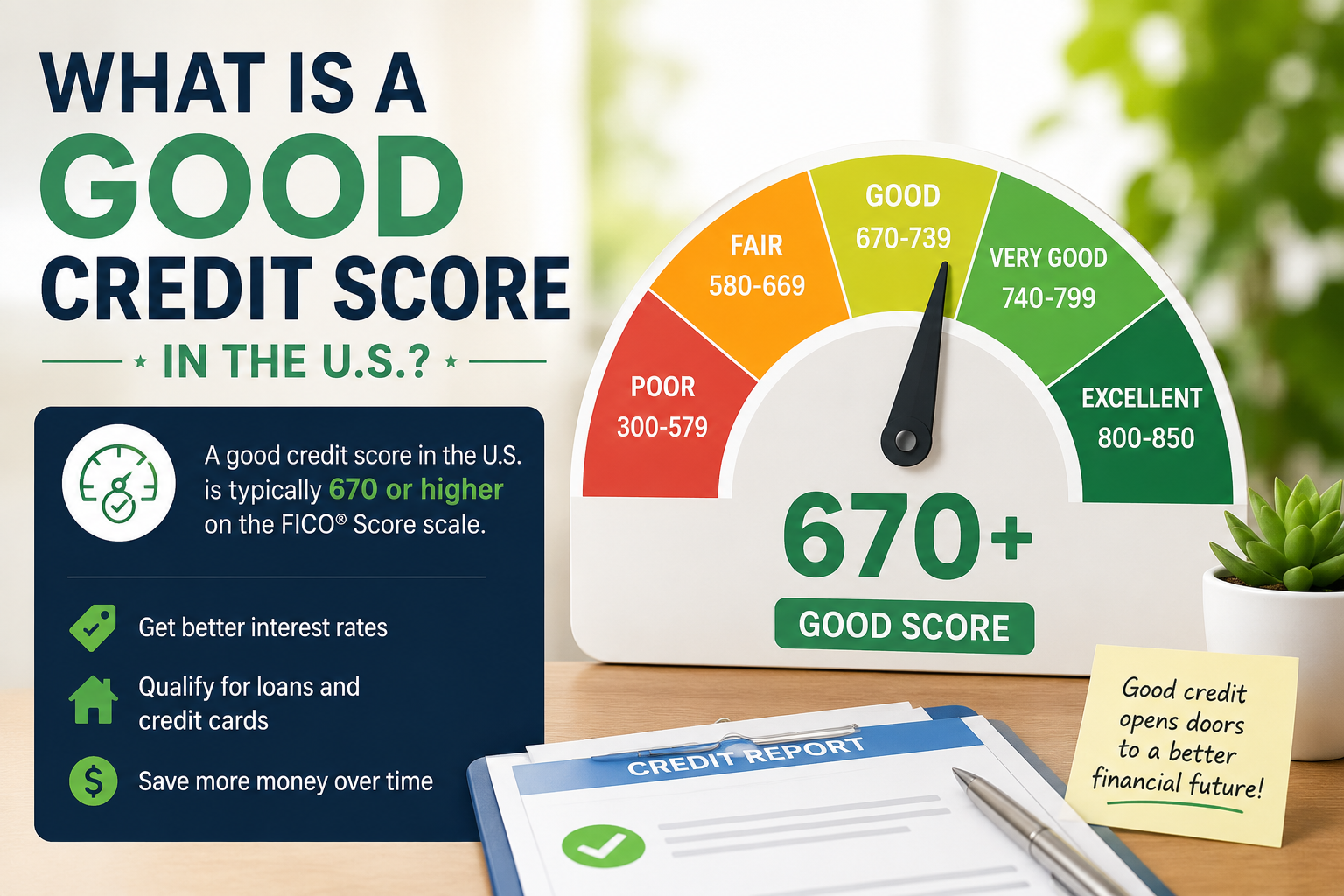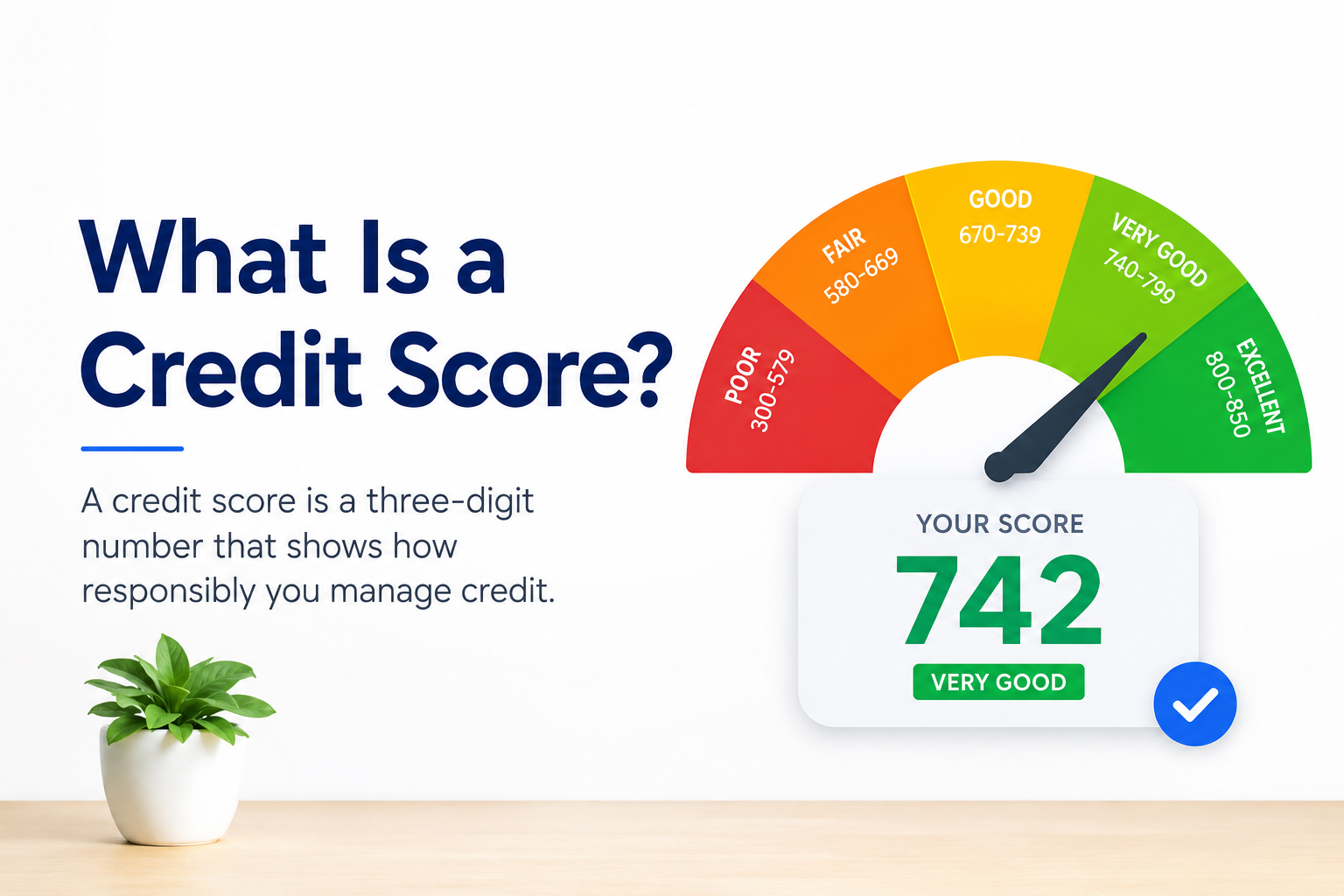
Have you ever checked your credit score on one website, only to find a different number when you looked at another?
For example, your bank might show a credit score of 742, while another credit-monitoring app displays 756. You then log into a third service and see 735. Naturally, you start wondering:
- Which score is correct?
- Is one website wrong?
- Should I be worried?
- Which credit score do lenders actually use?
The good news is that it’s completely normal to have different credit scores on different websites.
Many people assume they have only one credit score, but that’s one of the biggest misconceptions about credit. In reality, you can have multiple legitimate credit scores at the same time. The score you see depends on several factors, including which credit bureau supplied the information, which credit-scoring model was used, and when the data was last updated.
Understanding why these differences occur can help you avoid unnecessary concern and make better financial decisions. In this guide, you’ll learn why credit scores vary between websites, how credit bureaus and scoring models influence your score, and which score matters most when applying for credit.
Quick Answer (Featured Snippet)
Your credit score may be different on different websites because each service may use a different credit bureau, a different credit-scoring model, or information that was updated at a different time. Multiple credit scores can all be accurate because there is no single universal credit score used by every lender or website.
Why Do Different Websites Show Different Credit Scores?
If you’ve compared your credit score across multiple websites, you’ve probably noticed that the numbers don’t always match.
This does not necessarily mean one website is incorrect.
Instead, each website may calculate your score using different information.
For example, one website may use:
- Experian data
- A FICO® Score
- Information updated yesterday
Another website may use:
- TransUnion data
- A VantageScore®
- Information updated last week
Although both scores reflect your overall creditworthiness, they are based on different combinations of information and scoring methods.
Think of it like checking the weather using different forecasting services. Each service relies on its own models and data, so the temperature forecast may vary slightly, even though all are trying to predict the same conditions.
Credit scores work in a similar way.
There Isn’t Just One Credit Score
One of the biggest myths about credit is that everyone has a single, permanent credit score.
In reality, you can have many credit scores at the same time.
Different scores exist because:
- There are multiple credit bureaus.
- There are multiple credit-scoring models.
- Some scoring models have several versions.
- Information may update on different dates.
As a result, the number you see on one website may differ from the number shown elsewhere.
For example:
Sarah checks three different services on the same day.
- Her bank shows 748.
- A credit-monitoring app shows 756.
- Another service displays 741.
At first, she worries that something is wrong.
After learning how credit scores work, she realizes all three scores are legitimate—they simply use different data sources and scoring models.
This situation is very common and usually isn’t a sign of an error.
Credit Bureau Differences
One of the main reasons your credit score varies between websites is that different websites may use different credit bureaus.
The three major credit bureaus in the United States are:
- Equifax
- Experian
- TransUnion
These companies collect information about your credit accounts and create your credit reports.
Although they often contain similar information, the reports are not always identical.
For example:
A lender may report your account to Experian today but update Equifax several days later.
Another lender may report only to TransUnion.
Because each bureau may receive information at different times, your credit reports can differ slightly.
Since credit scores are calculated using information from your credit report, even small differences can produce different scores.
Example
Michael has:
- One credit card
- One auto loan
- One mortgage
His credit card company reports its latest balance to Experian immediately.
However, Equifax has not yet received the updated balance.
As a result:
- Experian calculates a score using the newest information.
- Equifax calculates a score using slightly older information.
Both scores are accurate based on the information available to each bureau.
Scoring Model Differences
Another major reason credit scores vary is that websites may use different credit-scoring models.
A credit-scoring model is a mathematical formula that evaluates the information in your credit report and estimates your credit risk.
The two best-known scoring models are:
- FICO® Score
- VantageScore®
Although both use similar types of information, they are developed by different organizations and use different formulas.
As a result, they may produce different scores even when using the same credit report.
For example:
Imagine two teachers grading the same essay.
Both use the same assignment, but each has a different grading rubric.
One gives the essay 92%.
The other awards 89%.
Neither teacher is wrong—they simply evaluate the work differently.
Credit-scoring models operate in much the same way.
Each model analyzes your credit history using its own methodology, which is why score differences are normal.
Why Small Differences Are Usually Nothing to Worry About
Many consumers become concerned when they notice a difference of 10, 20, or even 30 points between websites.
In most cases, these differences are perfectly normal.
Small variations often result from:
- Different credit bureaus.
- Different scoring models.
- Different update dates.
- Different versions of the same scoring model.
Rather than trying to make every score identical, focus on maintaining healthy credit habits that improve your overall credit profile.
When your credit profile becomes stronger, most of your credit scores tend to improve over time—even if they never match exactly.
Real-Life Example
Jennifer is preparing to apply for a car loan.
Before visiting the dealership, she checks her credit score using three different services.
She notices:
- One website shows 721.
- Another shows 735.
- Her bank displays 728.
Initially, she worries that one of the scores must be incorrect.
After learning that each website uses different credit bureau information and different scoring models, she understands that all three scores are reasonable estimates of her creditworthiness.
Instead of worrying about the exact number, Jennifer focuses on continuing to make on-time payments and keeping her credit card balances low.
Key Takeaway
It’s completely normal for your credit score to be different on different websites. There isn’t one universal credit score that every company uses. Instead, the score you see depends on the credit bureau providing the data, the credit-scoring model being used, and when the information was last updated.
Understanding these differences can help you avoid unnecessary concern and focus on what truly matters: building healthy credit habits over time. Rather than chasing identical scores across every website, aim to maintain accurate credit reports, pay your bills on time, keep your credit utilization manageable, and monitor your progress regularly.
Why Credit Scores Vary
If you compare your credit score across several websites, you may notice differences ranging from just a few points to several dozen.
While this can seem confusing, these variations usually have a simple explanation.
Three main factors determine the credit score you see:
- Which credit bureau supplied the information.
- Which credit-scoring model calculated the score.
- When the website last updated your information.
Understanding these three factors will help you interpret your credit scores with confidence and avoid worrying about small differences that are completely normal.
Equifax vs. Experian vs. TransUnion
In the United States, there are three major credit bureaus:
- Equifax
- Experian
- TransUnion
These companies collect information about your borrowing history from lenders and create your credit reports.
Although all three bureaus perform the same general function, their reports are not always identical.
This happens because lenders are not required to report to every credit bureau.
Some lenders report to:
- All three bureaus.
- Only two bureaus.
- Only one bureau.
As a result, your credit reports may contain slight differences.
For example:
- One bureau may already show your latest credit card payment.
- Another bureau may still display last month’s balance.
- A third bureau may not yet have received information about a recently opened account.
Since credit scores are calculated using information from your credit report, even small differences between reports can lead to different scores.
Why Credit Reports May Differ
Your credit reports may vary for several reasons.
Different Reporting Practices
Each lender chooses which credit bureaus receive its account information.
For example:
- Bank A reports to all three credit bureaus.
- Bank B reports only to Experian and TransUnion.
- Credit Union C reports only to Equifax.
Because of this, each bureau may have slightly different information about your accounts.
Different Reporting Dates
Even when a lender reports to all three credit bureaus, updates may not appear simultaneously.
For example:
- Experian receives updated information on Monday.
- TransUnion receives the same information on Wednesday.
- Equifax receives it on Friday.
During those few days, each bureau may calculate your credit profile using different information.
Processing Times
Each credit bureau processes incoming data independently.
This means:
- New accounts
- Updated balances
- Closed accounts
- Payment history
may appear on one bureau’s report before another’s.
FICO® Score vs. VantageScore®
Another major reason your credit scores differ is that websites may use different credit-scoring models.
The two most widely used models are:
- FICO® Score
- VantageScore®
Both estimate how likely you are to repay borrowed money.
However, they were developed by different organizations and use different mathematical formulas.
Because of this, they may produce different scores even when using the same credit report.
Why Different Scoring Models Produce Different Scores
Although both models consider similar categories of information, they may evaluate those factors differently.
Examples include:
- Payment history
- Credit utilization
- Length of credit history
- Types of credit accounts
- Recent credit applications
Each scoring model weighs these factors according to its own methodology.
Think of it this way:
Imagine two judges scoring the same gymnastics routine.
Both watch the same performance.
However, one judge awards 9.4, while another gives 9.1.
Neither judge is wrong.
Each follows a different scoring system.
Credit-scoring models work in much the same way.
Different Versions of FICO® Scores
Many people are surprised to learn that there isn’t just one FICO® Score.
There are multiple versions.
Some lenders use:
- Older FICO® Score versions.
- Newer FICO® Score versions.
- Industry-specific FICO® Scores.
For example:
A mortgage lender may use one version.
An auto lender may use another.
A credit card issuer may use yet another.
This means your FICO® Score can vary depending on which version a lender chooses.
Different Versions of VantageScore®
VantageScore® has also evolved over time.
As newer versions are introduced, some financial institutions update their systems while others continue using older versions.
This means two websites using VantageScore® may still display slightly different scores if they rely on different model versions or update schedules.
Why Some Websites Update Sooner Than Others
Not every website refreshes your credit information at the same time.
Some update your score:
- Daily
- Weekly
- Monthly
- Only after receiving new information
Others may refresh your score according to their own internal schedule.
This explains why:
- Your banking app may show an update today.
- A credit-monitoring service may update tomorrow.
- Another website may not refresh until next week.
Even though all three services are using legitimate information, they may be displaying data from different points in time.
Example of Different Update Dates
Imagine this timeline:
Monday
Your credit card company reports your lower balance to Experian.
Tuesday
A credit-monitoring website refreshes your Experian-based score.
You notice a score increase.
Thursday
Equifax receives the updated balance.
Friday
Your bank refreshes its Equifax-based score.
Now your bank also shows a higher score.
The two websites eventually reflect similar improvements, but not on the same day.
How These Factors Work Together
Your credit score depends on a combination of:
- Which credit bureau supplied the information.
- Which scoring model calculated the score.
- Which version of that scoring model was used.
- When the website last refreshed your data.
Because every website may use a different combination of these factors, seeing different credit scores is perfectly normal.
Real-Life Example
Daniel checks his credit score before applying for a personal loan.
He sees:
- 738 on his banking app.
- 751 on a credit-monitoring website.
- 744 on another financial website.
Initially, he believes one of the scores must be incorrect.
Later, he learns:
- His bank uses an Equifax-based FICO® Score.
- The monitoring service uses an Experian-based VantageScore®.
- The third website updates only once each month.
Daniel realizes that all three scores are valid estimates based on different data sources and scoring models.
Instead of worrying about the differences, he focuses on maintaining strong credit habits.
Key Takeaway
Different credit scores are completely normal because Equifax, Experian, and TransUnion may each have slightly different information, FICO® Scores and VantageScore® models use different formulas, and websites update their data on different schedules.
Rather than expecting every score to match exactly, focus on the overall health of your credit profile. Paying bills on time, keeping credit card balances manageable, reviewing your credit reports for accuracy, and limiting unnecessary credit applications are the habits that improve your credit across nearly all scoring models.
Which Credit Score Is Correct?
After comparing your credit scores on different websites, you may wonder which one you should trust.
If one website shows 742, another displays 755, and your bank reports 748, it’s natural to ask:
- Which score is correct?
- Which one do lenders actually use?
- Should I be worried about the differences?
The answer may surprise you: all of those scores can be correct.
The score you see depends on the credit bureau, the scoring model, and the timing of the update. There isn’t a single “official” credit score that every lender or financial institution uses.
Understanding how lenders choose credit scores can help you focus less on small differences and more on maintaining a strong overall credit profile.
Can Multiple Credit Scores All Be Correct?
Yes.
Many consumers believe there is one universal credit score, but that’s not how the U.S. credit system works.
You may have dozens of legitimate credit scores at any given time because different lenders and websites use different combinations of:
- Credit bureaus
- Scoring models
- Score versions
- Reporting dates
Each score is an accurate calculation based on the information and model used at that moment.
For example, if two websites use different credit bureaus or scoring models, it’s perfectly normal for them to show different scores.
Rather than asking, “Which score is correct?” a better question is:
“Which score is being used for my specific financial decision?”
Which Credit Score Do Lenders Actually Use?
There isn’t one credit score that every lender relies on.
Instead, lenders choose the scoring model that best fits their lending needs.
Some use FICO® Scores, while others use VantageScore®. Some even use their own internal credit assessment systems alongside traditional credit scores.
Because every lender has its own approval process, the score used for one application may differ from the score used for another.
Mortgage Lenders
Mortgage lenders often use specialized versions of FICO® Scores when evaluating home loan applications.
These versions are designed specifically for mortgage lending and may differ from the educational credit score you see on a free credit-monitoring website.
This is one reason applicants sometimes notice that the score used during the mortgage process is different from the score they checked online.
Auto Lenders
Many auto lenders also rely on specialized credit-scoring models that place greater emphasis on your history of managing vehicle loans.
For example, a borrower with an excellent history of making on-time car payments may receive a stronger score under an auto-specific model than under a general-purpose credit score.
Credit Card Issuers
Credit card companies may use a variety of scoring models when reviewing applications or determining credit limits.
Some issuers rely on FICO® Scores, while others may use VantageScore® or internal risk models.
In addition to your credit score, they often consider factors such as:
- Your income
- Existing debt
- Employment information
- Relationship with the bank
- Recent account activity
Your credit score is an important factor, but it is rarely the only one.
Why Banks May Show Educational Credit Scores
Many banks and financial websites provide customers with free access to their credit score.
These scores are useful for monitoring your credit health, but they may not be the exact score a lender uses when evaluating a loan application.
This doesn’t make the score inaccurate.
Instead, it serves as a helpful estimate of your overall credit standing and allows you to track changes over time.
If your educational score improves consistently, your lending scores are also likely to move in a positive direction, although the numbers may not match exactly.
Should You Worry About Small Score Differences?
In most cases, no.
A difference of:
- 5 points
- 10 points
- 20 points
is generally considered normal.
These differences usually result from:
- Different credit bureaus
- Different scoring models
- Different update dates
- Different versions of the same scoring model
Rather than comparing every score, pay attention to the overall trend.
If most of your scores are improving over time, your credit profile is likely becoming stronger.
However, if you notice a sudden and significant drop across multiple scores, it’s worth reviewing your credit reports to identify the cause.
How Often Should You Compare Your Credit Scores?
Checking your credit scores regularly is a smart financial habit.
For most people, reviewing your scores once a month is enough to monitor progress and detect unexpected changes.
You may also want to check your scores:
- Before applying for a mortgage.
- Before financing a vehicle.
- Before applying for a personal loan.
- Before requesting a new credit card.
- After paying down large credit card balances.
- After correcting an error on your credit report.
Regular monitoring helps you identify potential issues early without becoming overly focused on small day-to-day fluctuations.
Common Mistakes to Avoid
Many consumers become anxious when they notice different credit scores on different websites.
Here are some common mistakes to avoid.
Assuming One Website Is Wrong
Most reputable credit-monitoring services calculate valid credit scores using legitimate data and recognized scoring models.
Different numbers do not automatically mean one service is inaccurate.
Chasing an Exact Number
Trying to make every credit score identical is unrealistic.
Because different scoring models use different formulas, your scores may never match perfectly.
Instead, focus on building a healthy credit profile.
Ignoring Your Credit Reports
Your credit score is based on the information contained in your credit reports.
Reviewing your reports regularly can help you identify errors, detect fraud, and ensure your information is accurate.
Panicking Over Small Changes
A change of a few points is usually part of normal credit score movement.
Minor fluctuations happen as balances change, payments are reported, and accounts age.
Look for long-term trends rather than reacting to every small change.
The Best Long-Term Credit Monitoring Strategy
Instead of checking multiple websites every day, develop a consistent monitoring routine.
A good strategy includes:
- Checking your credit score monthly.
- Reviewing your credit reports regularly.
- Paying every bill on time.
- Keeping credit card balances low.
- Avoiding unnecessary credit applications.
- Monitoring for signs of identity theft or fraud.
Over time, these habits can improve your overall credit profile regardless of which scoring model a lender uses.
Real-Life Example
Emily is preparing to apply for her first mortgage.
She compares her credit score on three different websites and notices that each one shows a slightly different number.
At first, she worries that one of the scores must be wrong.
After learning that lenders may use different credit bureaus, scoring models, and score versions, she understands that the differences are normal.
Instead of trying to raise one specific score, Emily focuses on paying all of her bills on time, reducing her credit card balances, and reviewing her credit reports for accuracy.
By the time she applies for her mortgage, her overall credit profile has improved, giving her a better chance of qualifying for favorable loan terms.
Key Takeaway
There is no single credit score that every lender or website uses. Multiple credit scores can all be accurate because they are calculated using different credit bureaus, scoring models, score versions, and update schedules.
Rather than worrying about small differences, focus on the habits that matter most: paying your bills on time, maintaining low credit utilization, reviewing your credit reports regularly, and monitoring your scores consistently. A healthy credit profile is far more important than matching numbers across different websites.
Frequently Asked Questions (FAQs)
1. Why is my credit score different on different websites?
Different websites may use different credit bureaus, scoring models, or update schedules. As a result, it’s normal to see different credit scores across various services.
2. Is one credit score more accurate than another?
Not necessarily. Multiple credit scores can all be accurate because they are calculated using different information and scoring models.
3. Why is my FICO® Score different from my VantageScore®?
FICO® Score and VantageScore® are different credit-scoring models. They use similar information but weigh certain factors differently, which can produce different scores.
4. Which credit score do lenders usually use?
It depends on the lender. Many lenders use FICO® Scores, while others use VantageScore® or their own internal credit evaluation systems.
5. Why is my bank’s credit score different from Credit Karma?
Banks and credit-monitoring services may use different credit bureaus, scoring models, or data update schedules.
6. Is Credit Karma inaccurate?
No. Credit Karma provides legitimate credit scores based on the information and scoring model it uses. Those scores simply may not match the scores used by every lender.
7. Can my credit scores differ by 20 or 30 points?
Yes. Differences of this size are fairly common, especially when different credit bureaus and scoring models are involved.
8. Why did one credit score increase while another stayed the same?
One website may have updated your information before another, or the two scores may be based on different credit reports or scoring models.
9. Which credit bureau is the most important?
Equifax, Experian, and TransUnion are all important. Different lenders rely on different bureaus during the lending process.
10. Should I check all three credit reports?
Yes. Reviewing all three credit reports can help you identify errors, missing information, or signs of identity theft.
11. Do all lenders use the same credit score?
No. Lenders choose the scoring models and credit bureaus that best fit their lending practices.
12. Will checking multiple credit scores hurt my credit?
No. Checking your own credit score is considered a soft inquiry and does not affect your credit score.
13. Why do mortgage lenders use different scores?
Mortgage lenders often use specialized versions of FICO® Scores that are designed specifically for mortgage lending.
14. Why do auto lenders sometimes use different scores?
Auto lenders may use industry-specific scoring models that place greater emphasis on your history of managing vehicle loans.
15. Can I have more than one credit score?
Yes. Most consumers have multiple legitimate credit scores at any given time.
16. Should I worry if my scores don’t match?
Usually not. Small differences are normal and are rarely a cause for concern.
17. How often should I check my credit score?
Checking your credit score once a month is generally enough for most people.
18. What matters more than the exact score?
Healthy financial habits such as paying bills on time, keeping credit card balances low, and monitoring your credit reports regularly.
19. How can I improve all of my credit scores?
Focus on paying every bill on time, reducing your credit utilization, avoiding unnecessary credit applications, and correcting any errors on your credit reports.
20. Is there a single “official” credit score?
No. There is no universal credit score used by every lender or financial institution.
Myths vs. Facts
| Myth | Fact |
|---|---|
| Everyone has one credit score. | Most people have multiple credit scores. |
| Different scores mean one website is wrong. | Different websites may use different bureaus and scoring models. |
| My bank’s score is always the score lenders use. | Lenders may use different scoring models during the approval process. |
| Checking my own credit score lowers it. | Checking your own score is a soft inquiry and does not affect your credit. |
| All lenders use FICO® Scores. | Some lenders use VantageScore® or proprietary scoring systems. |
| Small score differences are a problem. | Minor variations are completely normal. |
| Credit scores update every day. | Updates depend on lender reporting schedules and the service you use. |
| One perfect score guarantees approval. | Lenders consider many factors in addition to your credit score. |
30-Day Credit Monitoring Plan
Week 1
- Check your credit score.
- Review your latest credit card balances.
- Verify that all recent payments were reported correctly.
Week 2
- Review your credit reports for any errors or unfamiliar accounts.
- Dispute any inaccuracies if necessary.
Week 3
- Pay down high credit card balances if possible.
- Avoid applying for unnecessary new credit.
Week 4
- Check your credit score again.
- Compare your progress with the previous month.
- Continue building healthy financial habits.
Following this routine can help you identify issues early and maintain a stronger credit profile over time.
Beginner’s Checklist
Before worrying about small score differences, make sure you’re following these fundamentals:
- ✔ Pay every bill on time.
- ✔ Keep your credit utilization below 30%, and lower if possible.
- ✔ Review your credit reports regularly.
- ✔ Monitor your credit score monthly.
- ✔ Avoid unnecessary hard inquiries.
- ✔ Maintain older credit accounts when appropriate.
- ✔ Use a mix of credit responsibly.
- ✔ Correct errors on your credit reports promptly.
When Should You Seek Professional Help?
Consider speaking with a qualified financial professional or a reputable nonprofit credit counseling agency if you:
- Notice significant errors that you cannot resolve.
- Are struggling with debt payments.
- Need guidance before applying for a mortgage or other major loan.
- Believe you are a victim of identity theft.
- Need help creating a plan to rebuild your credit.
Professional guidance can help you understand your options and make informed financial decisions.
Continue Learning
Expand your knowledge with these related guides:
- What Is a Credit Score?
- How Credit Scores Are Calculated
- FICO® Score vs. VantageScore®
- How Often Does Your Credit Score Update?
- How to Check Your Credit Score
- Credit Score vs. Credit Report
- How to Read Your Credit Report
- Why Did My Credit Score Drop?
- What Is a Hard Inquiry?
- What Is a Soft Inquiry?
- Does Checking Your Credit Score Hurt It?
Trusted U.S. Resources
For accurate and up-to-date information, refer to these trusted organizations:
- Consumer Financial Protection Bureau (CFPB) – Information about credit reports, credit scores, and consumer rights.
- AnnualCreditReport.com – The official website for obtaining free credit reports from Equifax, Experian, and TransUnion.
- myFICO® – Educational resources about FICO® Scores and how they are calculated.
- VantageScore® – Information about the VantageScore® credit-scoring model.
- Federal Trade Commission (FTC) – Guidance on identity theft, fraud prevention, and consumer protection.
Financial Disclaimer
This article is intended for educational purposes only and should not be considered financial, legal, or tax advice. Credit decisions vary by lender, and individual financial situations differ. Before making significant financial decisions, consider consulting a qualified financial professional or contacting your lender directly.
Conclusion
Seeing different credit scores on different websites is completely normal. Credit scores can vary because websites may use different credit bureaus, credit-scoring models, and data update schedules. These differences do not necessarily indicate an error or a problem with your credit.
Rather than focusing on matching scores across every platform, concentrate on maintaining a healthy credit profile. Paying your bills on time, keeping credit utilization low, reviewing your credit reports regularly, and monitoring your progress consistently are the habits that can improve your creditworthiness over time.
As your overall credit health improves, most of your credit scores are likely to improve as well, regardless of which website or lender is calculating them.
Table of Contents

Blessing Thagisa is a personal finance writer and researcher at Clear Money Steps, specializing in credit scores, credit reports, loans, budgeting, and consumer financial education. He is passionate about making complex financial topics easy to understand through accurate, practical, and well-researched guides. His goal is to help readers build strong financial habits, improve their credit, and make confident money decisions with clear, trustworthy information.